
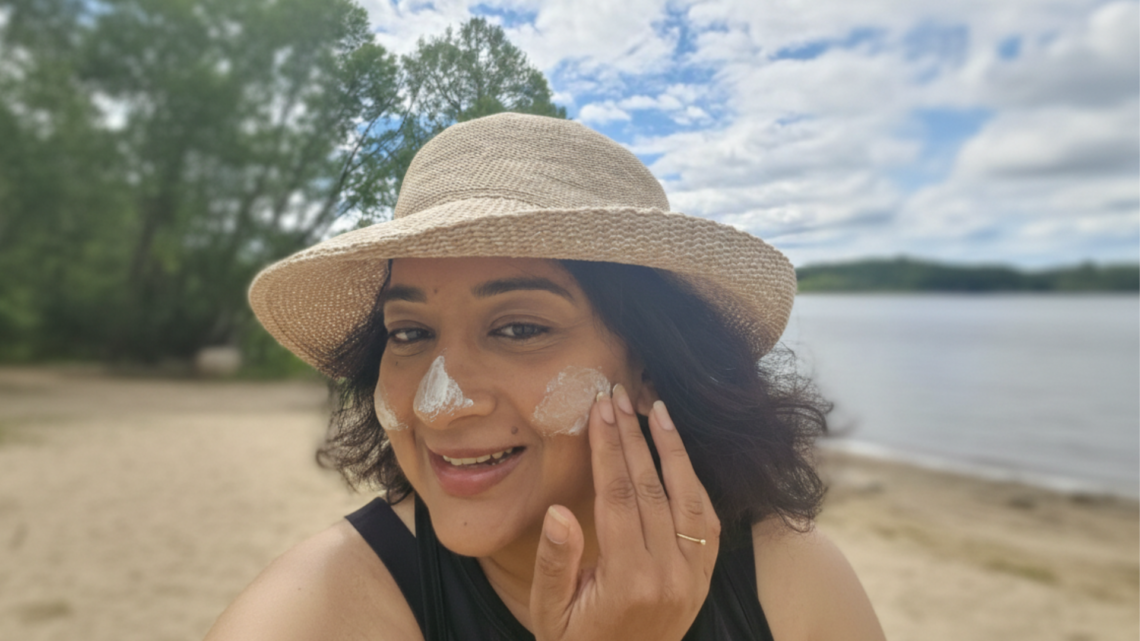
Because the world doesn’t need another ghost-white SPF pretending to be clean.
I Used to Hate Mineral Sunscreen. Here’s What Changed.
I used to think mineral sunscreen was punishment.
Thick. Chalky. Impossible to blend.
The kind that made you look like you’d lost a fight with a mime — and then asked you to reapply every two hours.
If you’ve ever put on a “clean” SPF and thought,
Why do I suddenly look grey?
—you’re not alone.
I’m an Indian-Australian woman with medium brown skin.
And for a long time, mineral sunscreen wasn’t just inconvenient — it was unwearable.
But after years of testing mineral sunscreens across climates, skin states, and real-life conditions — sweaty workouts, beach days, humid commutes, makeup days, bare-skin days — I found formulas that don’t treat darker skin as an afterthought.
This is the mineral sunscreen guide I wish I’d had years ago:
what actually matters, what doesn’t, and how to choose an SPF you’ll actually wear.
This is also the same framework I use to assess every sunscreen recommended on Conscious Glow.
Why Mineral Sunscreen (Especially for Sensitive & Melanin-Rich Skin)
Let’s clear up the confusion — without panic or preaching.
True mineral sunscreens use zinc oxide and titanium dioxide.
They sit on the surface of the skin and reflect UVA and UVB rays, rather than absorbing into the skin. That’s why they’re often better tolerated by sensitive or reactive skin, hormonally responsive skin and post-procedure or barrier-compromised skin.
For many people, mineral sunscreen isn’t a “clean beauty choice.” It’s a skin-survival one.
Where Darker Skin Gets Left Out
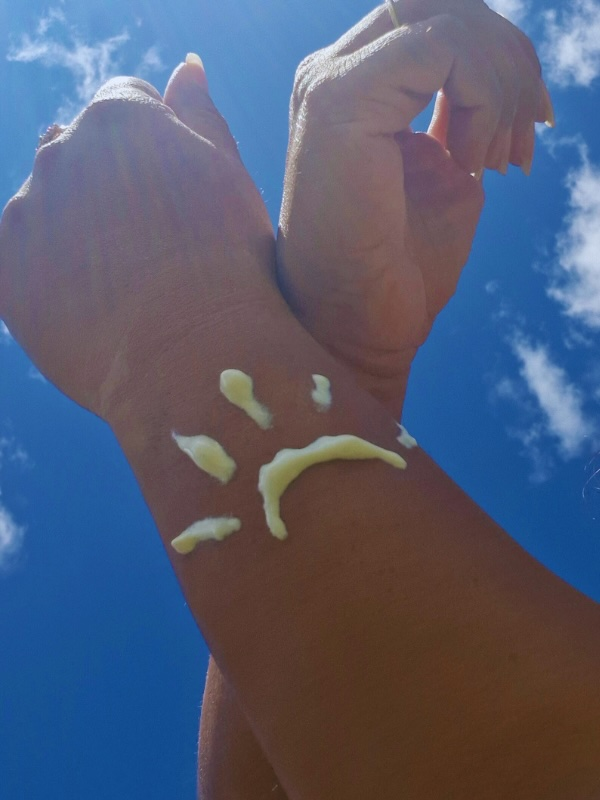
This is the part most sunscreen guides skip.
Mineral sunscreen has historically been formulated and tested with lighter skin tones in mind — which is why so many formulas leave a white, grey, or even purple cast on melanin-rich skin.
That doesn’t mean mineral sunscreen can’t work on darker skin.
It means formulation and finish matter more.
Mineral sunscreens that work well on brown and deep skin tones tend to have:
- well-dispersed zinc (not chalky clumps)
- thoughtfully balanced tints (not orange, not grey)
- textures that melt into skin instead of sitting on top
And yes — I test with that in mind.
Mineral vs Chemical Sunscreen (Quick, Honest Context)
Chemical sunscreens absorb UV radiation and convert it into heat. Plenty of people tolerate them well.
At Conscious Glow, we don’t moralise that choice. We simply don’t recommend chemical UV filters — because:
- they conflict with our ingredient standards
- they’re more likely to irritate sensitive or hormonally shifting skin
- some “mineral” formulas quietly include chemical boosters
Transparency matters more than labels.
How Conscious Glow Rates Sunscreens
This isn’t a vibe check. It’s a framework.
Every sunscreen is assessed through two separate lenses — because ingredients alone don’t tell the full story.
1. Ingredient Alignment (The Conscious Glow Scale™)
This reflects what’s in the formula, not how it performs.
🟢 Clean — Fully aligned
100% mineral UV filters, fragrance/parfum-free, essential-oil-free, no Glow-No ingredients. Designed for high tolerance.
🟡 Clean-ish — Context matters
Avoids Glow-No ingredients, but includes clearly disclosed trade-offs (such as beeswax, approved preservatives, or texture enhancers) to improve wearability or stability.
🔴 Not recommended
Includes Glow-No ingredients (like chemical UV filters or undisclosed fragrance). Sometimes referenced for context — never promoted.
2. Performance: Glow vs No Glow
Assessed separately. Because something can be clean — and still be awful to wear.
✨ Glow – Blends well, wears comfortably, works under makeup, respects real skin tones.
⛔ No Glow – Chalky, greasy, makeup-hostile, or impossible to reapply.
Both ratings matter. Always.
What Actually Makes a Mineral Sunscreen Work on Darker Skin
If you have medium-deep to deep skin, look for:
- tinted mineral sunscreens with neutral or golden undertones
- fluid or serum textures rather than dense pastes
- balanced zinc percentages with good dispersion
(higher zinc doesn’t always mean better finish)
If a sunscreen makes you apply less because it looks bad — that’s not a discipline issue. That’s a formulation failure.
Where to Find My Current SPF Picks

I maintain a living, updated list of mineral sunscreens that I revisit as formulas change and new launches appear — including notes on white cast, tint suitability and performance on brown skin.
👉 Best Mineral Sunscreens for Sensitive & Melanin-Rich Skin (Tested for Real Life)
Every product there is assessed for ingredient alignment, performance and finish on real skin — including deeper skin tones.
Real-Life SPF Tips (From Experience, Not Theory)
- Apply more than you think — under-application is why SPF “fails”
- Reapply when it matters (beach days, long drives, outdoor workouts)
- Tinted mineral sunscreens make reapplication easier and more wearable
- The best sunscreen is the one you don’t dread using
Final Thought
Mineral sunscreen doesn’t need to announce itself.
And it definitely shouldn’t erase your skin tone.
When formulated well, it’s quiet, supportive, and wearable —
even on darker skin, even in heat, even under makeup.
That’s the standard here.